Sunday, June 4, 2017

Chopo Chicken Vs. Me

This class is called Food For Thought. In this class we discussed many things such as how animals are treated badly and how some restaurants try to pump food out vs some restaurants that try to make quality healthy food that is better made. During this class, we watched a documentary called Food Inc., which is about the food process and how bad it is. I learned so much from this because, before I watched it, I only had an idea of what the process was like, but after this, I felt that I could go as far as to teach others. For this action project, I had to go to a restaurant and get a dish then make the same dish at home. I chose to get chicken, rice, and beans from Chopo chicken. After eating both I have to compare them and after that make a recommendation. Hopefully, you learn something new!

In this AP we compared a meal that we got from a restaurant to a home cooked meal that was similar. I compared chicken, rice, and beans from Chopo Chicken to my home cooked chicken, rice, and beans. In the end there was no clear winner, but I decided if you don't want to cook or you want a better meal and have money to spend than the restaurant meal is better for you.

Every bite releases juice and wonderful flavor. When you bite into it, you get tastes of light salt, lemon, and even a hint of garlic. But that's only the main part when you bite into the rest you get overwhelmed with a garlic, peppers, and light salt. Yes, I'm describing chicken, rice and beans, and not from any restaurant, these are from the wonderful Chopo Chicken. When I received my dish of the hardwood counter. I could smell the wonderful spices wafting off the plate. It made my mouth water even before I took a bite. When you think of chicken, rice, and beans what do you think of? Possibly strong scent, spices, juice, and maybe even some spicy flavor. When you eat this chicken you get a burst of all these (except for spicy). This meal is what you hope to get every time you order. Not only did it taste and smell amazing but it just simply felt good, it wasn't like a piece of fish that I had to worry about bones, and it definitely did not change texture throughout the piece. The whole thing was a constant soft piece of chicken that felt good and I was able to just savor and enjoy. The beans also felt good and the rice was soft and had a great flavor.
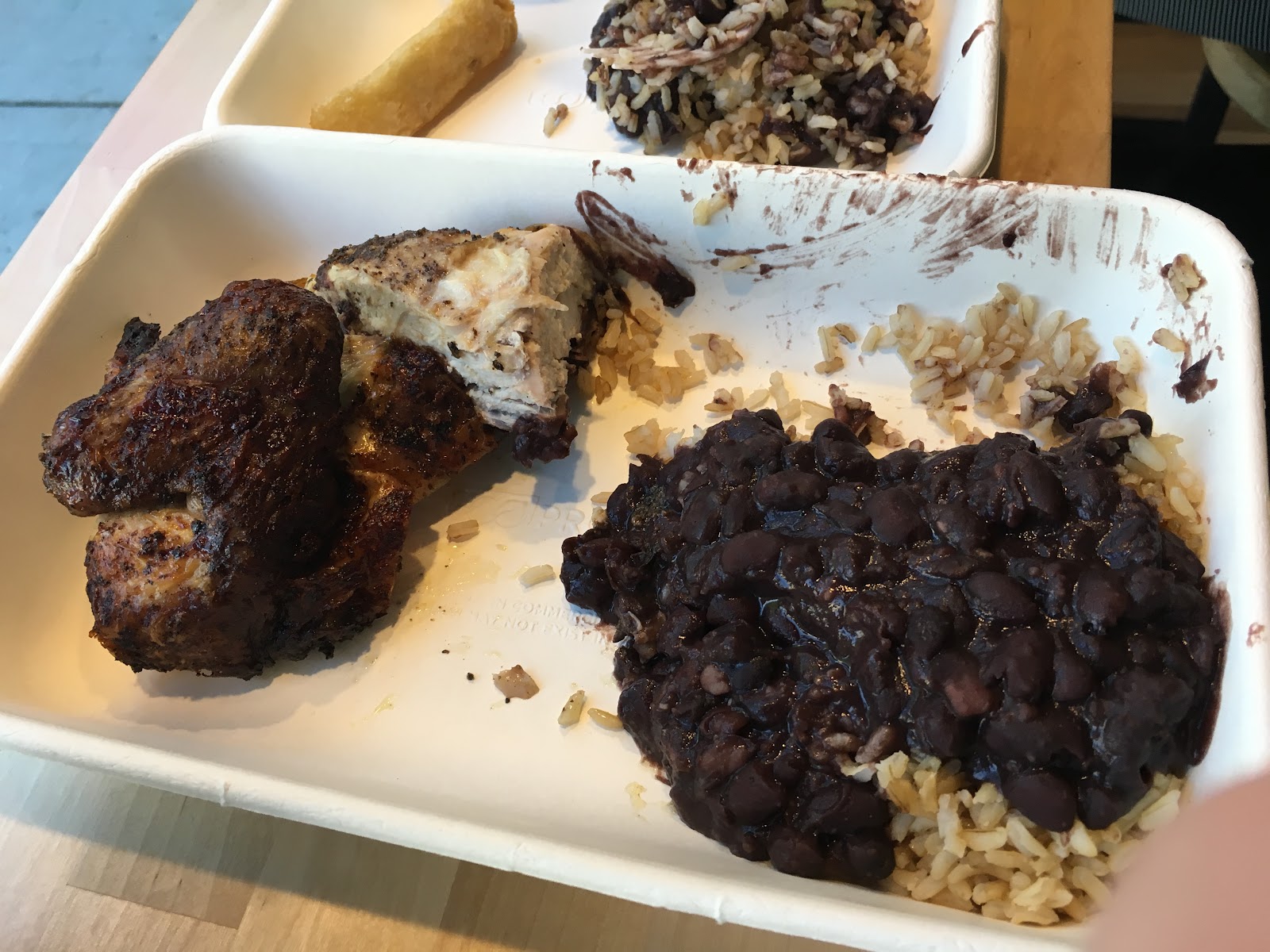
Chicken with rice and beans from Chopo Chicken

I am a fan of this meal, it is something that I get at least once every couple weeks. The place I got this from is rather new and only opened a couple of weeks ago. It is a small place called Chopo Chicken that has an outside eating area and a small inside area. It always smells good and it's definitely always busy. This was the first time I went there and it definitely surprised me. I usually get average quality food and this tasted much better than that. The menu size was not the largest and slightly resembled Chipotle's but without any other meats. I ended up buying a custom dish that allowed me to choose the ingredients. You may think this is a Mexican restaurant but actually its Peruvian.

This dish relates to Michael Pollan's five food transformations because it is a prime example of quality over quantity. The reason I think these two relate is that I noticed that they didn't have a large amount of chicken in the restaurant and the chicken they did have was less than average size (implying organic) but tasted really good. This shows that they aren't trying to pump food out as fast as possible but they are actually trying to put some effort into what they make. Chopo chickens food is fresh but they don't specify whether it's organic or not.
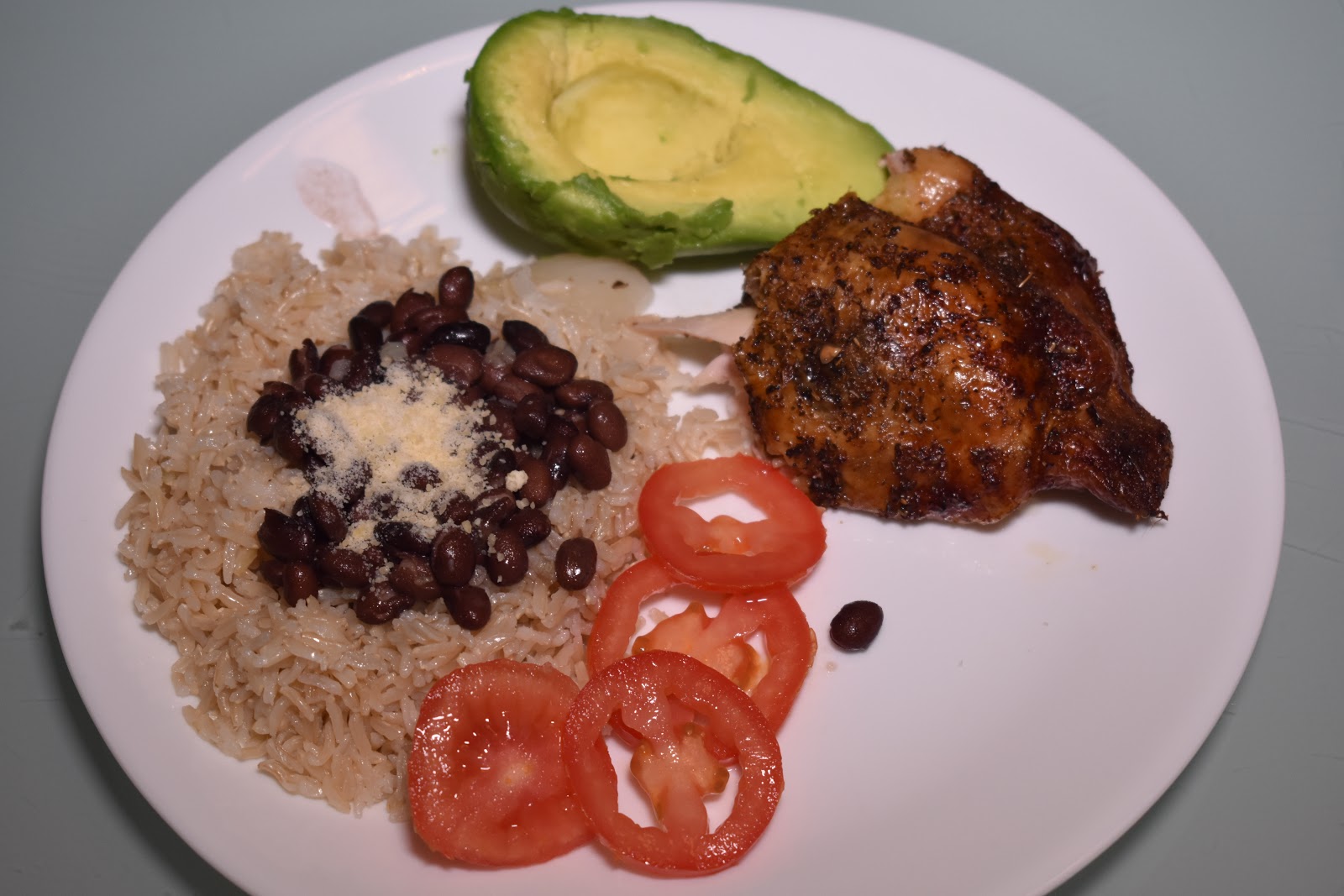
Home cooked meal

After eating the restaurant dish I really wanted to see how well I could make the same dish, so I bought chicken, rice, and beans. I figured this dish would be fairly easy to recreate since it isn't super complicated and the ingredients were simple. I cooked the chicken, added salt, pepper, and lemon. Then with the rice, I boiled it with onions to add flavor. When it was the beans turn I was slightly stumped since I have never made them before. I looked it up and they said I had to boil it so I did then I added garlic. After everything was done I put them all on a dish and invited my family to try the warm food. When I took the first bite I sensed that the chicken was delicious. The rice was very good and the beans also tasted flavorful. When I took a bite of the chicken I could really tell it was cooked just right because it was soft and it had a good constant texture. The rice was pretty flavorful and it felt like most rice would, soft and consistent. The beans tasted great and they had a great texture because they felt firm but not squishy or chewy.

I think the food from Chopo chicken was much better than the one I made because it was bursting with flavor and the way they made it made the chicken, beans, and rice taste better. Now there are two ways for me to do my recommendations because Chopo chicken was expensive compared to the home meal. I think if you're looking to save money the home meal definitely was not bad but you will save $10 at least. But if you really want good food and are willing to spend a little more than normal then Chopo Chicken is a perfect option for you. My food is fresh because the ingredients were not frozen and you can't consider frozen food fresh.

The food I made was pretty healthy, for example, the beans nutrition facts stated there was only 0g of total fat, 0g cholesterol, 430 mg of sodium, 20g of carbohydrates, 6g dietary fiber, 2g of sugar, and 7g of protein. The nutrition facts on the brown rice are as follows, 1g total fat, 0mg of cholesterol, 0mg of sodium, 33g total carbohydrates, 2g of dietary fiber, 1g of sugar, 4g of protein. The nutrients for the chicken are, 2g of total fat, 150mg of sodium, 0mg of potassium, 0g total carbs, 0g dietary fiber, 0g sugar, 27g protein. So overall this was a healthy and protein filled meal that I recommend anyone tries.

In conclusion, both dishes were good and I recommend the restaurant if you are wanting better food but for more money and the home cooked meal of you want cheaper and possibly larger quantities. You can't go wrong either way. Thanks

Thursday, June 1, 2017

Spanish Project

Hay un chico se llama Bob. Tiene una bicicleta de trek. Se sienta en la bicicleta y comienza a pedalear. El chico esta volador bajo la colina. Al fondo de la colina ahi esta un agujero. Bob pega el agujero y vuelar encima de bar.  Bob llora y llora hasta que el va a casa. Después Bob va a hospital donde Bob es Tratado para un lastimado brazo. Bob va a casa y está enojado. Bob se cae en la escalera. Se meuere en la sofa. Los padres de Bob tenidon un funeral en el suelo para bob. Ellos ademas habl acerca de bob.


Tuesday, May 30, 2017

GMO's More Like OMG's

This class is called food. In this portion of the semester, we learned about GMO's vs. organic food. I have learned so much and had some very difficult struggles. One thing that really stood out to me was a number of lies are told about the GMO industry. I never thought that people would criticize something so hard that they use every day. A hard struggle that I had was finding the time to finish this project. I found that trying to finish three projects within the last five days of school was a real struggle especially since I had interviews, outside classes, other homework, orthodontist, and doctors appointments. I overcame this challenge by staying up late and working whenever I had an opportunity. For this AP we had to choose a side (Pro-GMO vs. Anti-GMO). I chose pro-GMO because I feel that GMO's are very important to society.


Monday, May 29, 2017

Chicago Fire

At Chicago Fire Soccer Club I practiced soccer, played games and learned to work as a team. I learned a lot about teamwork and how to play as a team vs playing individually. I made a difference to others because I was a good teammate and I helped them learn team work. This experience impacted future jobs or volunteering experiences because in future things I will have lots of knowledge to work as a team rather than a individuale. I will share my experience with others by teaching soccer and also teaching teamwork. At the present time I am planning on playing soccer all four years of high school. I have 140 hours because I have played 3 times a week and had 1 game per weekend every week since December 1st 2016.


MSI Science Achievers

At the Museum of Science and Industry I did many things. First I would come in and learn the content that I needed to know for presenting to guests on the floor. Second I would go to the fab lab (Fabrication Laboratory) and create diffrent things with diffrent machines such as laser cutters, vinyl cutters, 3d printers, and 2d printers. Third, after lunch I go to the floor to present the current topic such as bed of nails which we demonstrate with a balloon and a bed of nails, for this I talked about how surface area affects weather the balloon would pop or not. Another topic I presented was the heart anatomy where the guests had to guess the diffrent parts of the heart and I would let them know if they were correct or not then I would explain what the part does. Fourth I would go to a class where we learn teamwork and we bond as a community. I made a difference to others because I taught hundreds of people new things and they really benefited from this because this was their first time hearing what I was teaching so they got a great first impression and wanted to come back for more. I plan to share my experience with others by telling them about the program and  also teaching them things I have learned. I plan to stay in the program for all four years through high school.


Chicago Lights

I have been introduced to Chicago lights through my church that I attend, Fourth Presbyterian. I've found this to be a very useful resource for having a mentor that I look forward to meeting every week and talking about everything from math to working out. I have also been coached on my platforms such as my resume, cover letter, and LinkedIn all for future job prospects. I am grateful to be part of such a great organization and my mentor has coached me through a lot of learning. I am so grateful to be part of such a great organization. I look forward to staying with them until I graduate. My focus is to use my time wisely.

In this program, I learned about how to apply for a job, how to do interviews, how to dress for them, and we made different things such as LinkedIn, my resume, and cover letters. I made a difference to others because when I get a job I will be helping people in need or teaching people new things. This has impacted future volunteering or work I do because now I will be prepared for it and I will know what to do and how to do it. I will share my experience with others by telling them about the experience or even teaching them new things.


Tuesday, May 23, 2017

Death By Monoculture?

This class is called Food For Thought. In this course, we talked about death. We learned about everything from the Irish Potato Famine to where certain foods originated from. In this course I encountered many struggles, one was right now during this action project and my computer wouldn't work and I couldn't receive feedback. I solved this by charging my computer when I got home and asking my parents and sister for feedback. We also did multiple FE's which gave me more insight into what we were learning. For this project, I had to write about a problem that's facing our global food supply. I brought up the topic of monocultures. These monocultures are massive problems because they make it easy for a single disease to come around and wipe out all the crops. I also talk about solutions and why they are good. If you have ever heard or even don't know what a monoculture is then kept reading to find out.


Did you know that during the Irish potato famine according to encyclopedia Britannica the population fell 25% in 1872? A monoculture is when you plant clones of the same plant in the entire field. The global food system relies on people all over the world to help produce food and if any place has a monoculture then the entire system can collapse because of one simple disease. Monocultures make the global food system extremely susceptible to failure and so if everyone changed to a polyculture then everything would be safer. I will be proposing solutions to SDG 2 which is no hunger.

Our food system depends on farmers to produce food. Three reasons that monocultures are not good are monocultures fail really easily according to control freaks they are 94% more susceptible than normal crops. This can become a massive problem for obvious reasons. Another reason is when monocultures destroy places they are known to kill thousands of people. A good example of this is what happened in Ireland and they lost thousands of people. The last one is monocultures use way more pesticides than average crops. All these things combined create a really dangerous crop that is susceptible to disease.

Ireland is a good example of a place that suffered from monoculture but there are other examples. California had a monoculture problem with their grapes and they were forced to replant 2 million grape vines. China also has one,“For instance, China is now a vast “sea of monocultures” dotted with little islands of native rice.” (pg. 488)

If you decide to depend on a single monoculture that could spell disaster for your country. The only way you could say Ireland addressed its problem, after the fact, was to stop planting monocultures and start planting polycultures. There is one really simple thing that we can learn from history and that is to never and I mean never plant monocultures. The safe way to go is to plant a polyculture. In case you're wondering the reason places are still planting monocultures is that they are what are considered cash crops which simply means they are produced for their money not for the farmers use.

There are a few things farmers can do to address this problem. First, I think that the government from where you're from can subsidise farmers who grow different crops so that a disease doesn't come through and wipe everything out. In the past governments have subsidized farms many times. According to Wikipedia the U.S government has given farms $1.4 billion in subsidized money. Second, Eat locally grown foods because small local farms don't grow monocultures. You might be wondering how we will get everyone to eat locally grown food and a solution is for more people to start their own gardens, especially in the city. You also may be wondering how we'll make the prices affordable, if enough people buy local then the prices will start decreasing since the farmers are getting more business. Third, don't buy from places that plant monocultures because it supports these farms and allows them to keep growing monocultures.

Our planet can't afford a mess up to the scale the Irish did, it wasn't just the Irish people's fault that they're crops messed up but I just am pointing out how disastrous it was. So we should never grow a monoculture. What you should take from this is that the best way to avoid the effects of planting a monoculture are to plant a polyculture. Polycultures are way safer and they create a nice variety of plants for people. Polycultures don't use nearly as many pesticides as a monoculture because they aren't as susceptible to disease as monocultures are. One way for you to support polycultures is by buying local since local farms aren't normally monocultures and you won't be supporting a farm that relies on a monoculture crop.

It will be addressing SDG 2 because it is zero hunger and if we find a more sustainable way to produce food then we will be able to feed everyone. When you're in a grocery store and are ready to pick up the cheap generic potato remember how many people died from something just like that.


Kniss, Posted By Andrew. "The problem with monoculture." Control Freaks. N.p., 17 Aug. 2013. Web. 23 May 2017.

Monoculture and the Irish Potato Famine: cases of missing genetic variation. N.p., n.d. Web. 23 May 2017.

Mokyr, Joel. "Great Famine." Encyclopædia Britannica. Encyclopædia Britannica, inc., 19 Apr. 2017. Web. 23 May 2017.

"Monoculture." Wikipedia. Wikimedia Foundation, 15 May 2017. Web. 23 May 2017.

"6 Problems with Monoculture Farming." Regenerative. N.p., 16 Dec. 2016. Web. 23 May 2017.

"Agricultural subsidy." Wikipedia. Wikimedia Foundation, 22 May 2017. Web. 23 May 2017.


Sunday, May 14, 2017

Clash of the Leavening Agents

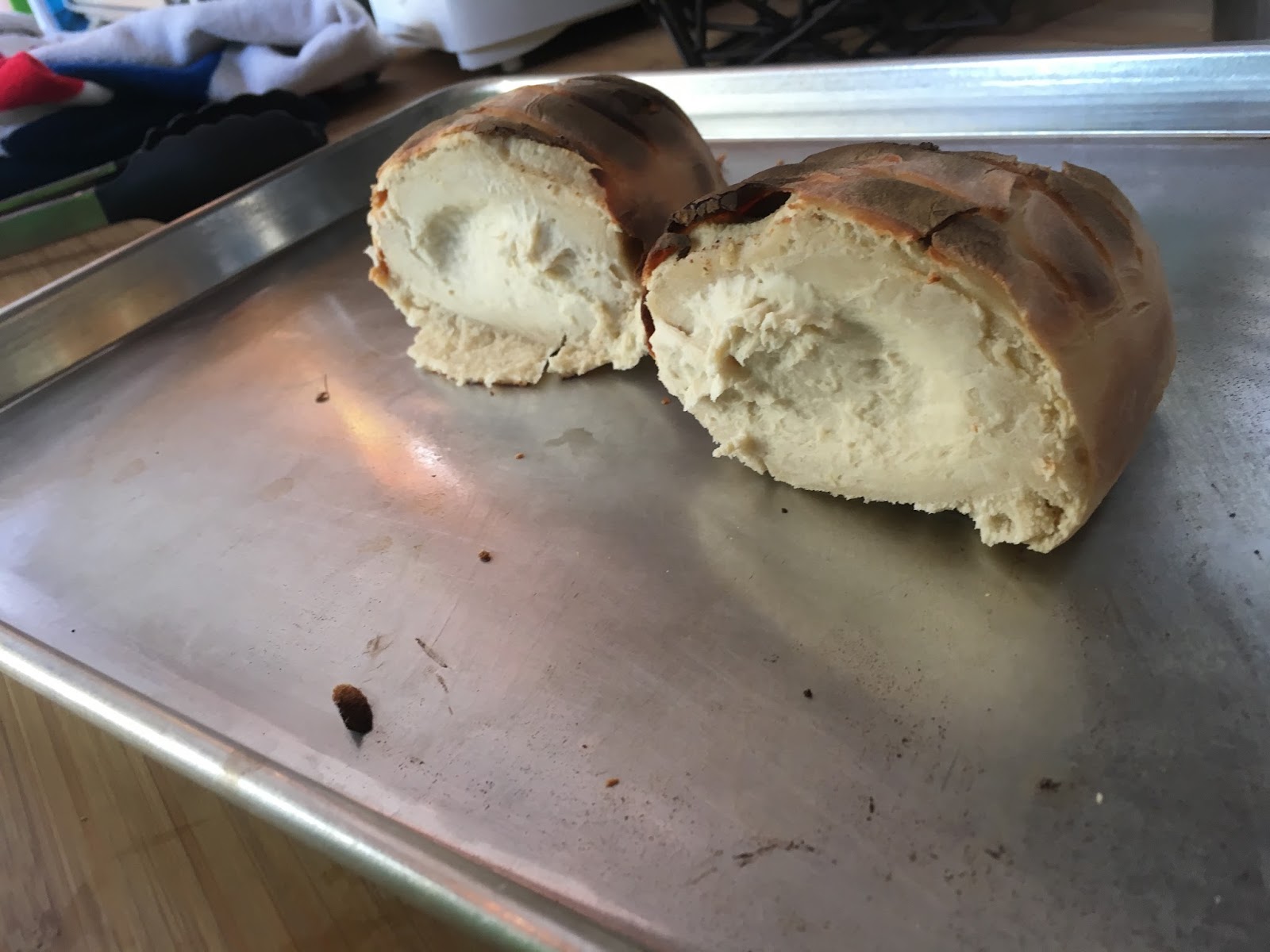
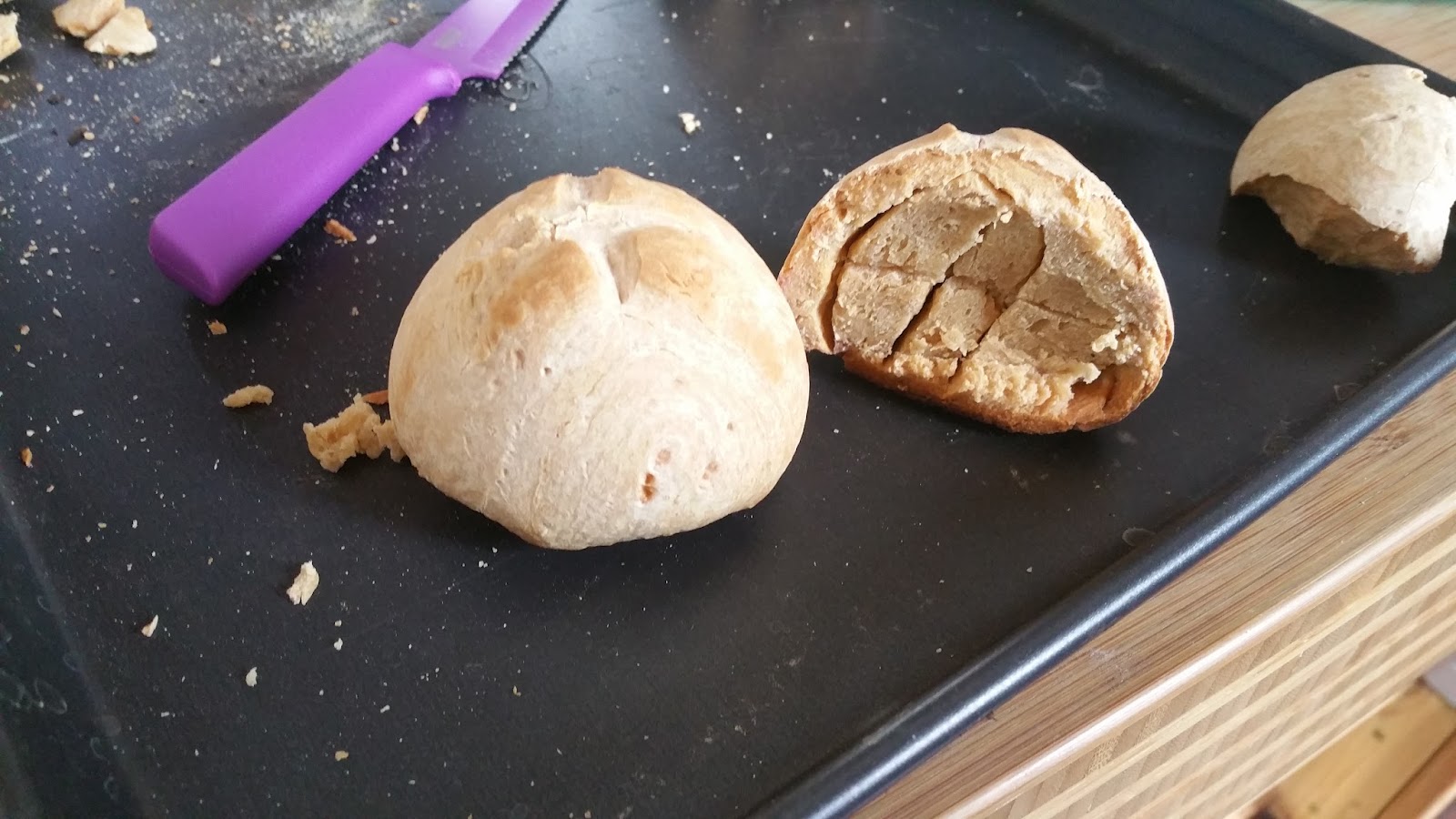
This class is a STEAM class where we discussed food. To be more precise we looked at baking, leavening agents, the history of mankind related to food and fire, and we even got a chance to bake our own foods. I especially found the part about mankind's history to be interesting because I didn't know the impact that food and fire had on us. I definitely did not know that we used to have massive arms since we had to live in trees and we had super strong guts so that we could combat bacteria that was in the food that we couldn't cook before. I really like learning about how we completely changed after we figured out that we could create fire and cook our food, it's the reason our brains are so large now. For our action project, we had to bake bread to see what kind of leavening agent rose the highest, my group cooked sourdough bread which uses the sourdough starter as a leavening agent. The other two groups were baking soda and yeast. This was a difficult project because my group had a very hard time getting the bread to bake correctly and in the end, we did not manage to make it work. It was still a valid experiment and we used it which meant our bread grew the least.

In this project, we compared how much sourdough, baking soda, and yeast rose compared to each other. There were a few different variables in the bread such as the baking time, leavening agent used, and the baking temperature. Leavening agents are what are used to make the bread rise. All the loaves are going to be compared with rising height, taste, and texture. The research question we will be asking is which leavening agent makes the bread rise the highest. My hypothesis is that the baking soda will rise the highest because we created baking soda to replace natural leavening agents, and I don't think that we designed something that can't perform as well as natural things so I'm guessing baking soda. There are also different things called control groups and experimental groups. The control group was the yeast and the experimental group was the baking soda and the sourdough. A control group is a group we know the outcome of and is more predictable. The experimental group is the group that we not sure of the outcome so we compare it with the control group to see what changed.

Control Group: Commercial Yeast Bread
Ingredient
Calculations
Revised Amount

Water
3 x 1/4
¾ cup

Flour
7 x 1/4
1 3/4 cups
Salt
1 x 1/4
1/4 tablespoon
Yeast
1 1/2 x 1/4
⅜ tablespoon


Experimental Group 1: Sourdough Yeast Bread

Ingredient
(copy from the recipe)
Calculations
Revised Amount
3 ½ cups flour

3 ½ x 1
3 ½ cups
2 cups of buttermilk
2 x 1
2 cups
1 teaspoon salt

1 x 1
1 teaspoon
1 teaspoon baking soda

1 x 1
1 teaspoon
1 teaspoon sugar
1 x 1
1 teaspoon


F
Experimental Group 2: Chemical Leavening Agent Bread

Ingredient
(copy from the recipe)
Calculations
Revised Amount
4 Cups
Water
4 divided by 4
1 cup
10 Cups
All-Purpose Flour
10 divided by 4
2.5 cups
3 ½ Teaspoons
Salt
3 ½ divided by 4
.875 teaspoons or ⅞ teaspoons
¾  cups of sourdough starter
 ¾ divided by 4
.187 cups or 3 tablespoons or 3/16 cups


Directions
-Yeast
  1. Mix all the ingredients in the bowl to form the dough.
  2. Cover the dough and let it sit for 2 hours then put in the fridge for 2 hours.
  3. Make loaves out of the dough then let it sit for another hour.
  4. Cut the top of the bread and put it in the oven for 10-15 minutes at 450 degrees.
-Sourdough

  1. Put all the ingredients except for salt into a bowl then mix it.
  2. Mix all the ingredients into the dough then let it sit for 15-60 minutes.
  3. Knead the bread and add salt as your kneading it.
  4. Let the dough sit for 4-6 hours.
  5. Form the dough into loaves
  6. Cut the top of the loaves then put them in the oven until the bread is 195 degrees.
-Baking Soda
  1. Combine all the dry ingredients then put in the buttermilk.
  2. Mix all the ingredients then put shape them into a loaf shape.
  3. Slit the dough.
  4. Bake the dough at 450 degrees for 30-40 minutes.
For this action project, we needed to make 1 loaf of each type of bread so we needed to convert the recipe to make 1 loaf. I put the conversion below.

Conversions
-Yeast
Everything x 1/4
  1. 3x1/4=.75 or 3/4 cups of water
  2. 7x1/4=1.75 or 7/4 cups of sugar
  3. 1x1/4=.25 or 1/4 tablespoon of salt
  4. 1 1/2x1/4=.375 or 3/8 tablespoons of yeast
-Sourdough
  1. 4x1/4= 1 cup of water
  2. 10x1/4=2.5 or 5/2 cups of flour
  3. 3 1/2x1/4=.875 or 7/8 tablespoons of salt
  4. 3 1/2x1/4=.1875 or 3/16 cups of starter
-Baking Soda
  1. Already makes 1 loaf of bread so there isn't a need for a conversion.


-Results
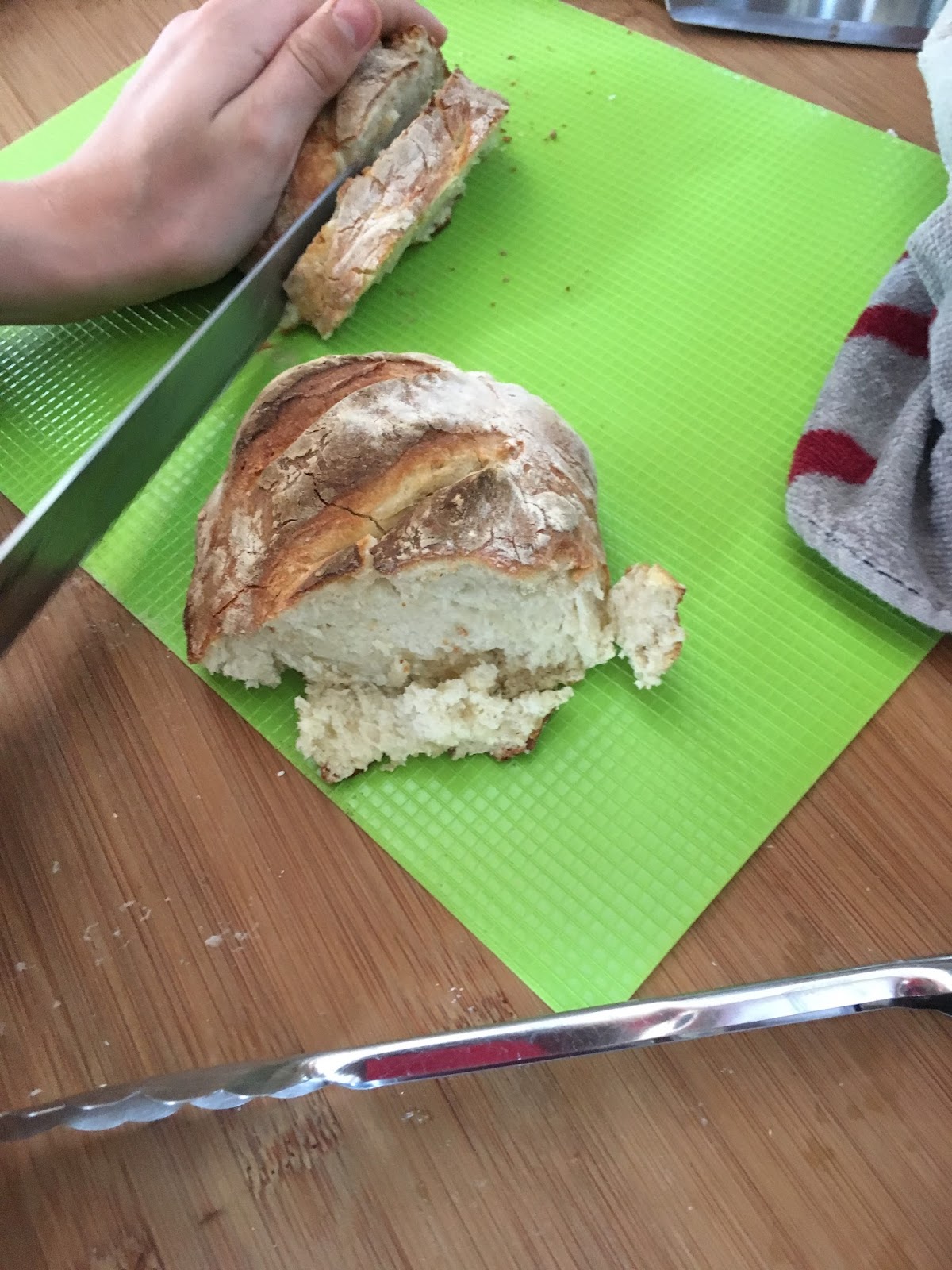
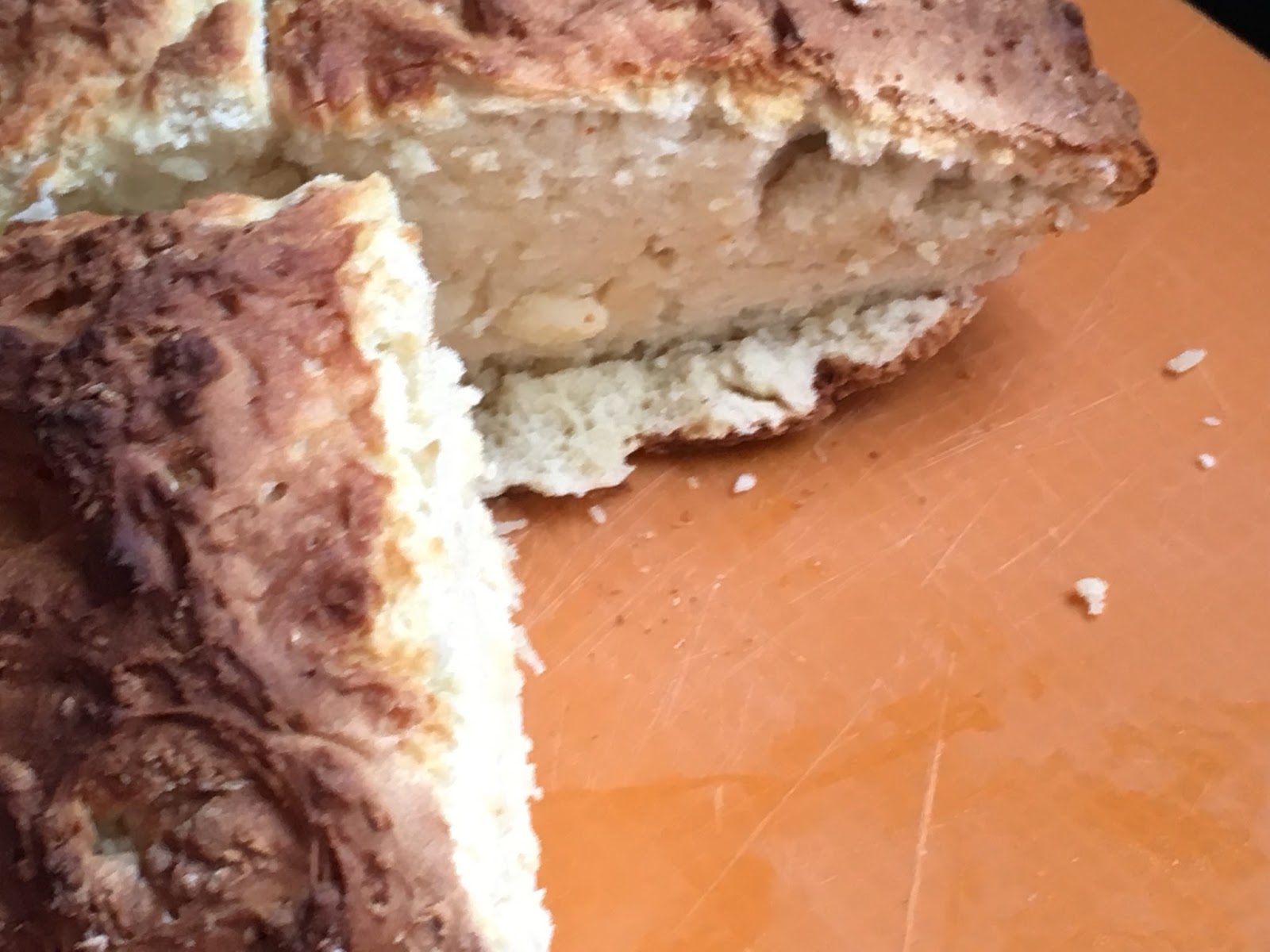
Yeast: The yeast bread turned out really well and it smelled, looked, and felt perfect. This loaf of bread rose from 2 to 3 inches tall after being baked.

Sourdough: The sourdough bread was a complete failure and could not have turned out worse. Neither loaves rose at all and I think the reason for the failure the first time was because of incorrect kneading technique, dead sourdough starter, and incorrect baking temperature. The second time failed because of kneading and dead sourdough starter. The first loaf of bread we cooked I wouldn't try but the second loaf tasted a lot like salt.

Baking Soda: The baking soda bread turned out very well. It smelled, looked, felt, and tasted good. It rose the most going from 2.5 inches to 4 inches. So it turns out that my hypothesis is correct. 


File_002.jpeg
RP, Sourdough 1, (2017)

Copy of 20170511_121140.jpg
DS, Sourdough 2, (2017)
Add caption

File_009.jpeg
RP, Yeast, (2017)

File_004.jpeg
RP, Baking Soda, (2017)


Sunday, April 30, 2017

Got Milk?

We took a class called Food For Thought. For the first quarter of the class, we studied everything from corn and all its ingredients to how it gets to our table. I have learned so much during this class. I was amazed at how much corn really goes into everything we eat or even that we don't eat. For this, action project, we had to show how a certain food or ingredient gets from our table from where it was first domesticated. For my family, I chose milk, mainly because a lot of times we sometimes make flan which is a milk-based cake. I tracked it all away from the Fertile Crescent to my table. I learned a lot from this Action project I was surprised at how milk how far milk has come. I hope you learned something new from this Action project. Thanks.


Bauer, Scott. DairyCattle. 2007. Maryland.

Carpio, Enrique Fotógrafo. Veracruz. 2012. Veracruz.

Delivery truck. 1946. N.p.

"Historical Timeline - Milk - ProCon.org." Is drinking milk healthy for humans? N.p., n.d. Web. 30 Apr. 2017.

Ltd, Bobek. "Great Britain National Flag Free Stock Photo - Public Domain Pictures." PublicDomainPictures.net. N.p., n.d. Web. 30 Apr. 2017.

Moos, Anon. Texas Flag. 2011. N.p.

Pasteurized Milk Factory. 2013. Atatürk.

Rings, Five. Milk bottle. 2008. N.p.

Jinx! "Spent grain." Flickr. Yahoo!, 02 Mar. 2008. Web. 30 Apr. 2017.

"Sugar Dessert Flan Caramel Sweet Delicious." Free photo Sugar Dessert Flan Caramel Sweet Delicious - Max Pixel. N.p., n.d. Web. 30 Apr. 2017.

Tigris River, Diyarbakır. 2007. Turkey.

Wednesday, April 26, 2017

Don't Put The Plants To Sleep On The Ground

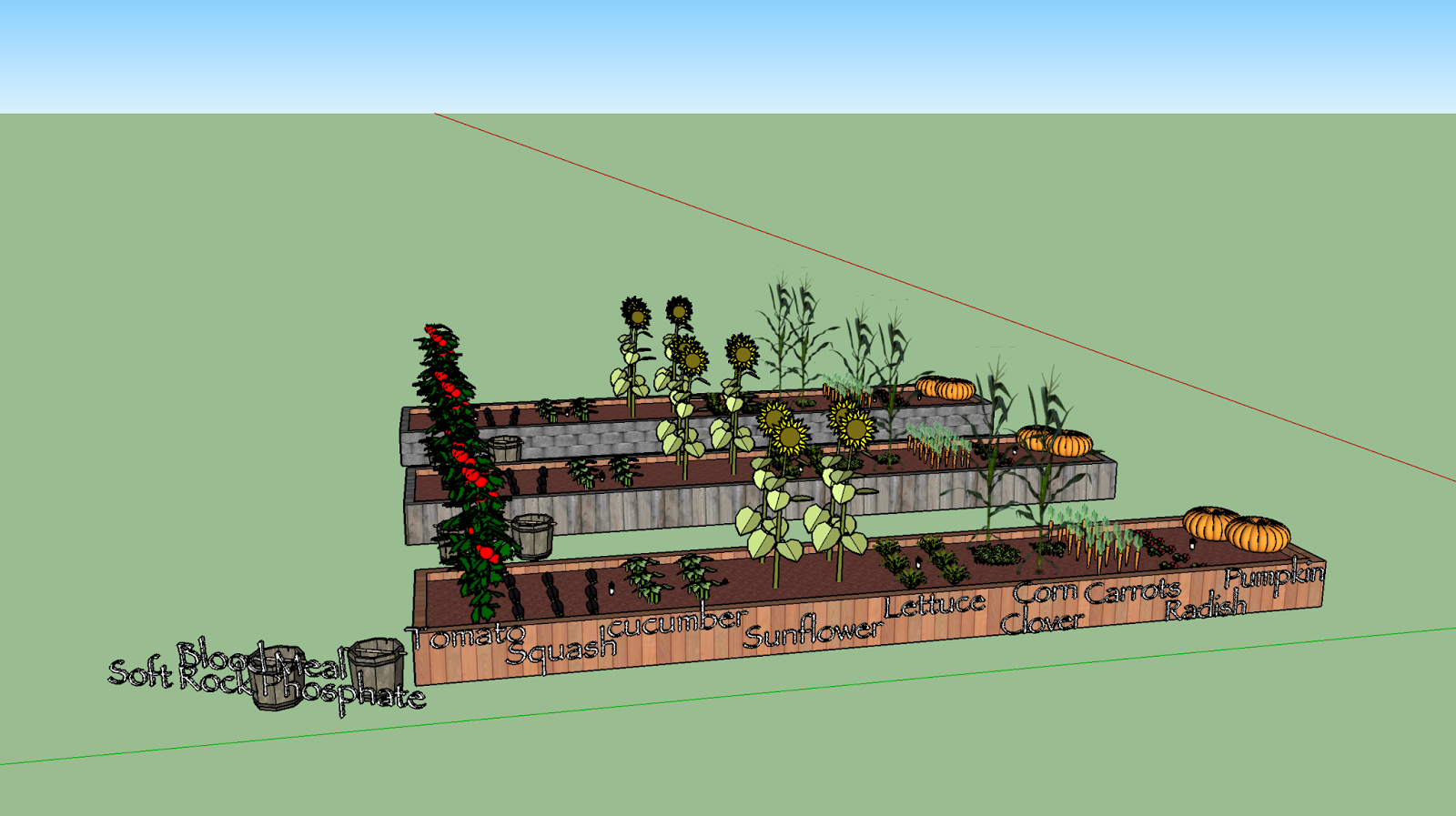
In the first unit of food class, we talked about food, where it comes from, how it gets to our table, and different ways that people across the world grow it from people like Fukuoka to Darwin. One thing that we focused on at the end of this section was different Garden types, how people grow their food, and companion planting and companion plants. For the Action Project, we had to design our own garden in any form, whether it be a raised garden to buckets, and then we had to choose the right plants to go together in the garden. Along with this, we had to figure out the different minerals and materials in the soil where we plan on planting our garden and figure out what supplements we had to use.


My garden will be in front of GCE Lab School on the sidewalk where people aren't walking. This is a great place to put a garden because it's long, wide, it has good dirt and it has lots of people that can take care of it. I chose this spot because I don't have anywhere else near my house to put a garden even on the sidewalk because there are so many things in the way. Also, the sidewalks aren't very wide at my house so this was an ideal location to put a garden.

The materials I used for this raised-bed are two by fours from the store, two by fours that are recycled and reused from anywhere and stone blocks from the store. I chose these materials because they're ideal for building a raised bed: wood is a cheap and reliable way to make it strong and sturdy, also stones are fairly cheap and make a very good and good-looking raised bed.

My soil quality was actually very good. The nitrogen level was 34, the potassium level was 245, and the phosphorus level was 11. Despite how good the quality of this dirt was I still had to add supplements. I added 11.25 pounds of blood meal to the dirt for Nitrogen. The way I figured out I needed 11.25 pounds of blood meal was by looking at a chart that showed that my nitrogen levels were high. This means that I would have to add 3 pounds per 100 square feet, so I did 3x3.75=11.25 pounds. For Potassium I do not have to add any supplements because I have the exact amount. I have 11 Phosphorus which is a decent amount but won't cut it. For the amount of phosphorus that I have, I will need to supplement it with 3 pounds of Soft Rock Phosphate per 100 square feet. I had to do the exact same equation as the nitrogen which is 3x3.75=11.25 pounds. I added these because without them the plants would not survive.

I will not be using any natural farming techniques because to be a natural farmer you need plants that aren't accustomed to being overwhelmed with pesticides and fertilizer. Unfortunately, you really cannot just buy these plants from the store. They have to become accustomed to nature and to not be supported by humans. I do not have the time or money to spend on plants that can't live by themselves. What I'm looking for is a garden that is more simple to take care of and is more average.

From this project, I have learned how to make a garden functional, how different plants can work with each other, and that Chicago does not have good soil quality. I do not plan to implement my garden only because I have 3 raised beds which are 25 feet long by 5 feet wide. All these gardens would be cool but they are not ideal things to have in Chicago since they are so large.

My raised beds are 25 feet by 5 feet by 1 & a half feet tall, each raised garden has 187.5 square feet of space. In total, I will need 562.5 square feet of dirt to fill all three gardens properly. The total surface area is 375 square feet because each garden is 25 feet by 5 feet which equal 125 which I have to multiply by three.

In conclusion, I have learned a lot about gardening, nutrients that plants need, and how they really thrive and live. Before this project, I didn't really know that plants needed so much care and work. Also after we visited the different gardens it taught me a ton about how much effort really goes into having a garden in the city. The people worked very hard on all the gardens and had everything from drainage pipes to nets over the plants. I don't think I would have enough time or drive to keep a garden running for long enough.